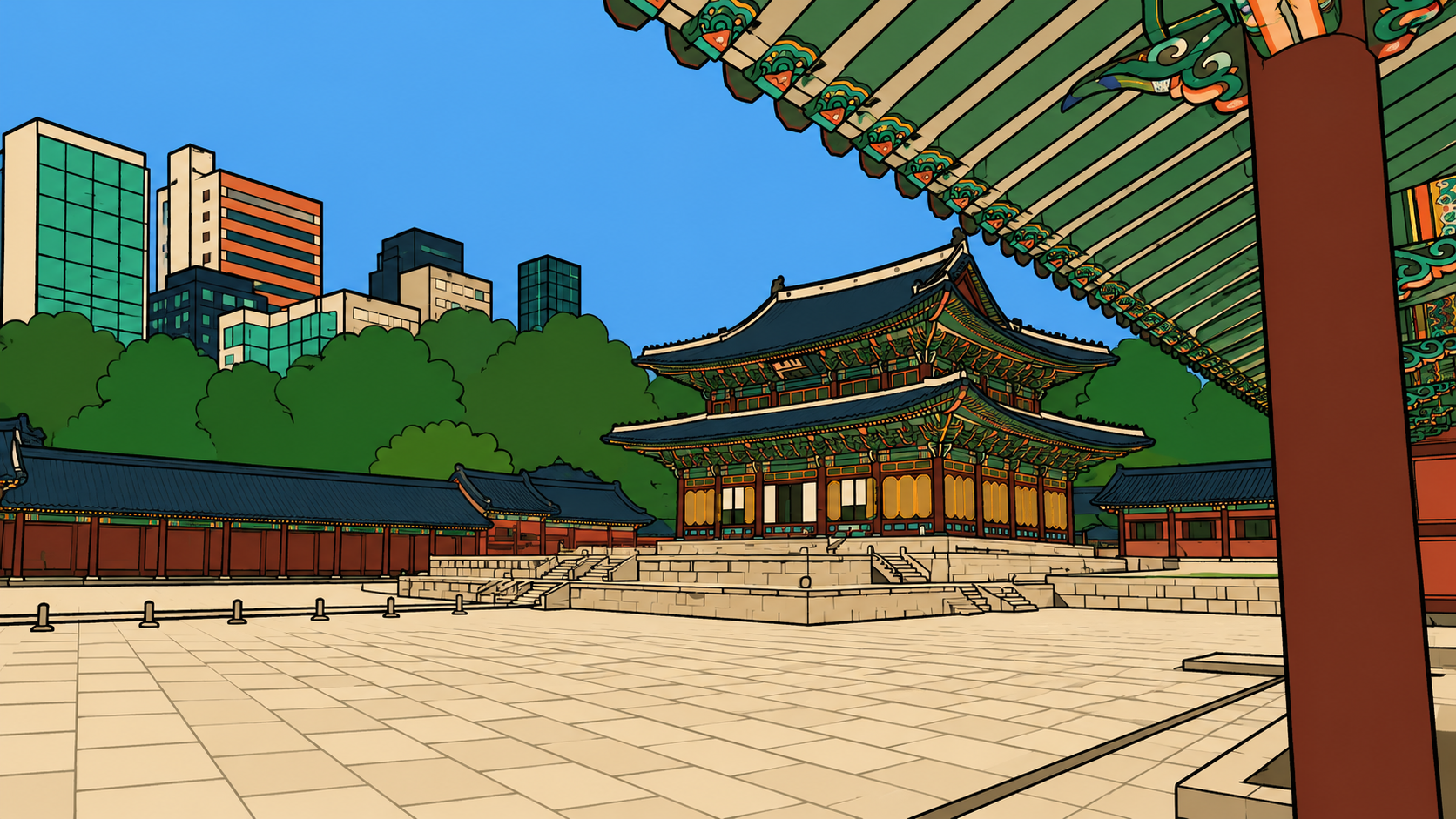
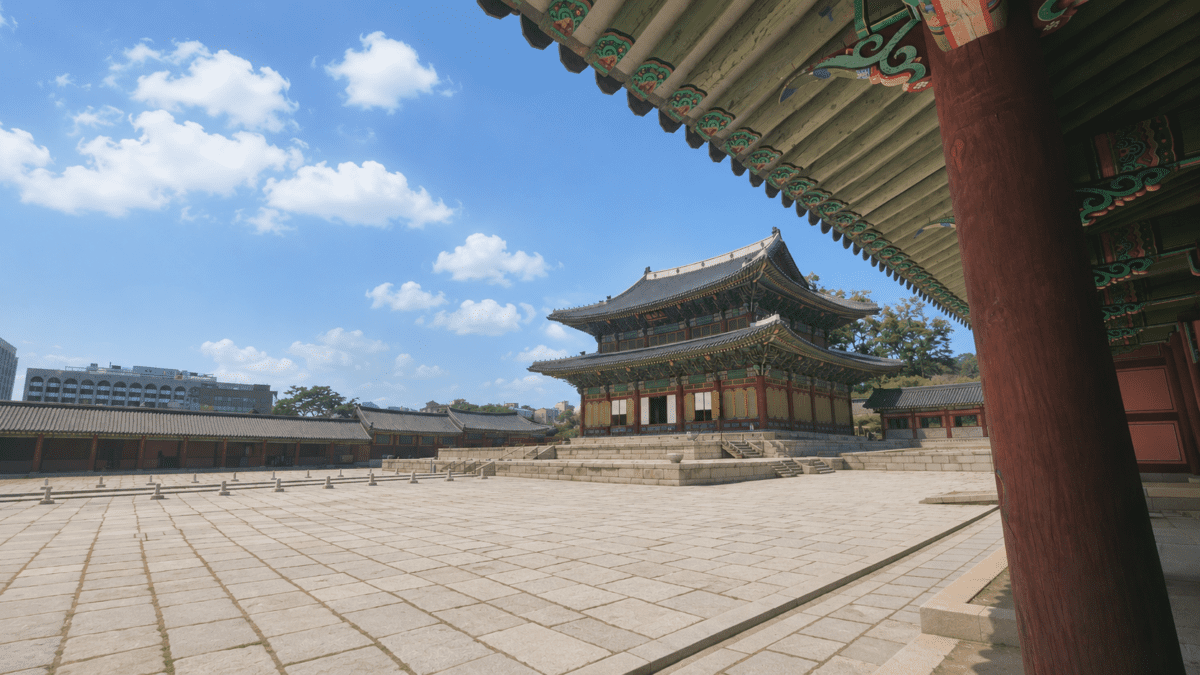
It’s late March and something has already shifted. Not loudly. The meetings are the same, the calendar is the same, but the decisions being made this week have a different weight from the ones made in February. Something soft has entered the room and rearranged the priorities.
This shift has a station in K-Saju. Myo (묘: myo, spring rain wood), the fourth of the twelve earthly branches, is where the first movement of In gets softened, redirected, and quietly committed to a path.
In pushed through the cold. Myo is the adaptability that decides whether that push becomes a year or a false start. A chart carrying Myo at its center runs on that same redirecting logic: not stopping the movement, not accelerating it — reshaping it through pressure so soft it rarely registers as pressure at all.
What the Spring Cycle Meaning in Astrology Actually Records

Myo is the second wood branch in the twelve-station system, the one that follows In and completes the wood cycle of spring. The hour is 5 to 7 AM. The month spans early March through early April, bounded by the solar terms Gyeongchip (경칩: gyeong-chip, insects awaken) and Cheongmyeong (청명: cheong-myeong, clear and bright). The element is Wood (목: mok) in its yin expression — lateral, adaptive, water-shaped.
If In is the vertical shoot pushing through cold soil, Myo is the spring rain that falls on that shoot and decides which direction it will actually grow. Same tree, different mechanism. In commits through force. Myo commits through saturation.
Myo is not personality. It is a structural month in which direction gets quietly decided while nobody is paying attention. The person with Myo prominent will make the year-defining decision in March without anyone around them — including themselves — recognizing it as the moment the year turned.
What Myo records is a specific kind of commitment — the one that happens through small accumulated choices rather than a single declared move. The rain doesn’t announce itself. It soaks. By the time the soil is saturated, the shape of the year is already set.
The Single Stem Running the Spring Rain
The real mechanism lives inside Myo’s Jijanggan (지장간: ji-jang-gan, the hidden stems concealed within a branch). Myo carries two hidden stems, but Eul (을: eul, yin wood, the vine) governs almost the entire station — a brief residual Gap (갑: gap, yang wood) at the opening gives way quickly to Eul, which runs the rest of the branch. This is one of the purest jijanggan configurations in the twelve-branch system: a station ruled by a single stem in all but its first days.
The purity matters. Where In layered three yang stems in ascending intensity, Myo effectively runs on one — the brief Gap residue yields, and Eul holds the rest of the station with no transition and no internal hierarchy. Just Eul — pure adaptability, wood that bends around obstacles rather than pushing through them, wood that finds the angle of least resistance and commits to it completely. A chart holding Myo is not reading “gentle initiative.” It is reading a single-stem wood structure that shapes its environment by flowing into every available space.
Four interactions govern how Myo behaves with the rest of a chart.
MyoSulHap (묘술합: myo-sul-hap, combination producing fire). Myo and Sul (술: sul, late autumn earth) sit across the six-harmony axis, and when they meet, the vine of Myo is pulled into Sul’s fire storehouse and the pairing converts toward heat. This is not a gentle combination. It is the moment soft spring wood gets redirected into visible output — the quiet growth of March turning into something that finally shows. A chart with this pairing runs on decisions that stay absorbed until they surface, committed in private and revealed only when they ignite.
HaeMyoMi SamHap (해묘미 삼합: hae-myo-mi sam-hap, three-combination producing wood). When Hae, Myo, and Mi (미: mi, summer earth) appear together, the three branches combine into a powerful wood structure. Myo is the central pivot of this three-harmony — the full expression of wood between water’s feeding and earth’s grounding. A chart with this configuration carries a wood output that is less visible than In’s vertical thrust but far more sustained.
MyoYuChung (묘유충: myo-yu-chung, wood-metal rupture). Myo and Yu (유: yu, autumn metal) are positioned directly across the cycle — the spring rain wood versus the autumn blade metal. When they meet, the vine gets cut at its most saturated point. Unlike InSinChung, which interrupts rising momentum, MyoYuChung severs direction that had already committed. In practice, this looks like a year where the soft decisions made in March get overturned by a sharp correction later — usually through an external authority, sometimes through the person’s own delayed second-guessing.
JaMyoHyeong (자묘형: ja-myo-hyeong, the discourtesy friction). Less violent than the chung but longer-lasting. Ja (자: ja, midnight water) and Myo grind against each other through overfeeding rather than cutting — water pouring into wood until the growth loses its discipline. Decisions committed in a Myo month quietly lose their shape across the year, not through a single rupture but through sustained, formless saturation.
These four interactions determine whether Myo’s soft redirection holds or dissolves. The reading does not rest in the visibility of the decision — it rests in how Myo redirects what In started, and how a chart protects or exposes that redirection determines what the reading says.
Three Ways Myo’s Direction Fails to Hold

Myo fails in three ways, and each one requires a different strategic response.
Saturation without direction. The chart has Myo prominent with no structural frame to hold the direction — no metal branch to define the shape, no earth branch to stabilize the growth, no fire branch to mark the destination. Eul fills every available space without committing to any. Externally this looks like someone who says yes to every opportunity that arrives in March, cannot choose between them, and ends the year with commitments in five directions and no completion. The movement is real. The commitment is real. What’s missing is the frame that would have turned saturation into shape.
Delayed softening. The opposite failure. Myo is present but overridden by a dominant metal or earth-heavy configuration that blocks the softening. The chart holds the potential for redirection but cannot execute it. The vine stays rigid, forcing itself through In’s original path even when the environment is clearly asking for a different angle. In practice, this looks like someone who made a decision in February and refuses to let March recalibrate it, even as the evidence accumulates that the original direction was wrong. The rain falls. The soil stays hard.
Reversed commitment. The subtlest failure. MyoYuChung activates through Sewoon (세운: se-woon, the annual cycle), and the saturation gets cut mid-year. The person makes the soft March decision, it takes root, and then between July and October an autumn metal configuration undoes it — a correction from above, a reversal by the original committer, a sudden realization that the quiet choice was wrong. Unlike aborted sequence in In, which cuts the rising shoot, reversed commitment in Myo severs a decision that had already matured. What failed was the timing of protection — Myo’s direction was solid but exposed when the metal arrived.
Soft pressure is not the same as uncertain pressure, and the difference is where most readings collapse. Myo reads each of these failures in its adaptability as structural, not as weakness. Saturation without direction asks for a metal or earth partner — a frame to shape what the rain generates. Delayed softening asks for permission to recalibrate mid-motion. Reversed commitment asks for seasonal protection — knowing when Yu arrives and insulating the March decision from autumn re-examination.
Myo in Each Chart Position
The spring cycle meaning in astrology lands differently depending on where Myo sits in the chart’s four positions — Yeonji (연지: yeon-ji, birth year position), Wolji (월지: wol-ji, birth month position), Ilji (일지: il-ji, birth day position), Siji (시지: si-ji, birth hour position). Each position changes what the soft pressure is actually reshaping.
Yeonji. Myo at the year level means the generational redirection is active. The family line or cohort is running on saturation logic — often marked by a parent or predecessor who changed direction quietly, made the year-defining decision without announcing it, or accepted a commitment through a series of small yeses rather than one large declaration. A Myo year branch often reads as inherited adaptability. The 2023 Gye-Myo year (계묘년: gye-myo-nyeon) placed this logic at the annual scale for the entire world, and the quiet realignments after the forced launches of 2022 — career corrections, relationship redefinitions, financial strategy shifts — mapped precisely onto the structure.
Wolji. This is the most structurally heavy position for Myo. Month branch sets the chart’s elemental center of gravity, and Myo as month places the whole chart in mid-spring wood logic. Decisions become saturated before they become visible. The person operates on accumulation rhythm by default. This is also the position where MyoYuChung carries the most weight in a natal chart when a Yu year arrives — the cutting lands on the month branch, reversing the year’s directional investment.
Ilji. Myo at the day level describes the person’s immediate environment and closest relationship. The partner, the home, the daily body — all run soft-redirection logic. Quick to adapt, slow to announce, committed through accumulation rather than declaration. Relationships with a Myo day branch often deepen through small unremarked decisions that only become visible when someone tries to reverse them.
Siji. Myo at the hour level describes late-life output and the way one’s final chapter takes shape. Careers that end not in a single culminating move but in a series of soft pivots — each one small, each one saturating — often show Myo at this position.
Daewoon (대운: dae-woon, the ten-year major cycle) can also land on Myo. When it does, the ten years run on redirection logic regardless of what the natal chart wants. This is the decade where Myo’s adaptability overrides personality, preference, and plan. A person who launched hard during a previous In decade will find their direction quietly reshaped across a full Myo decade — not reversed, reshaped. The same tree, growing toward a different light.
What This Station Cannot Predict

Myo gives a clear reading of three things: when redirection is structurally active, which decisions are taking root beneath the surface, and which autumn interaction is most likely to sever them later. The first movement that In pushed through the cold is now being reshaped by a pressure that operates below the threshold of conscious attention. The year is being decided.
What the data cannot tell you is whether the decision you make this March will hold. Two people with identical Myo placements will commit to the same kind of soft choice and experience different outcomes — one as the year-defining pivot, the other as the commitment that autumn overturns. The chart shows the mechanism. It does not show the shape of the frame you have built around the mechanism. It does not show whether the people around you will recognize the quiet turn for what it is, or whether a metal configuration you cannot yet see is already approaching from the autumn side of the year.
I read charts, and I can say with confidence when Myo is active, whether the single-stem Eul is reaching saturation, and whether MyoYuChung is on the horizon within the next two years. I cannot say whether the direction you are soaking into this week is the one that deserves your year. That variable sits outside the structural data, in the territory of what you chose to commit to during In and what you allowed to be watered during this station. Any K-Saju reader who claims to forecast the durability of a Myo decision is selling something the system does not contain.
The strategic response to Myo is specific. Notice which small yeses you have said in the last three weeks. Ask which decision is quietly taking root while you were not watching. If the chart shows Yu approaching, begin building the frame now — the metal protection that will keep the March commitment intact when autumn arrives to re-examine it. Do not mistake the softness of the mechanism for the softness of the outcome.
Late March. The rain falls on saturated ground. Somewhere, a decision has already been made.
This post was planned and edited by a human, with AI assistance.