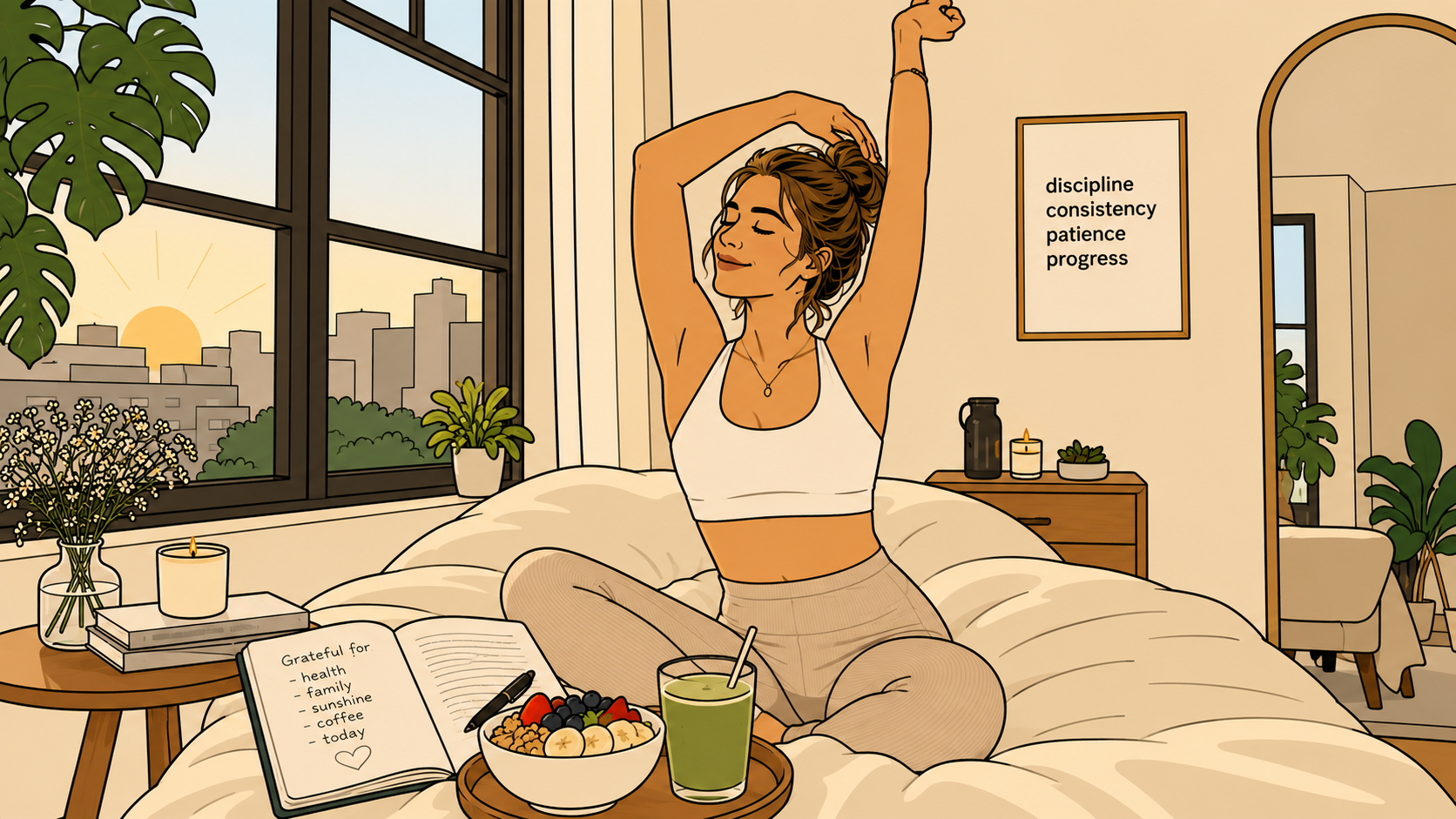
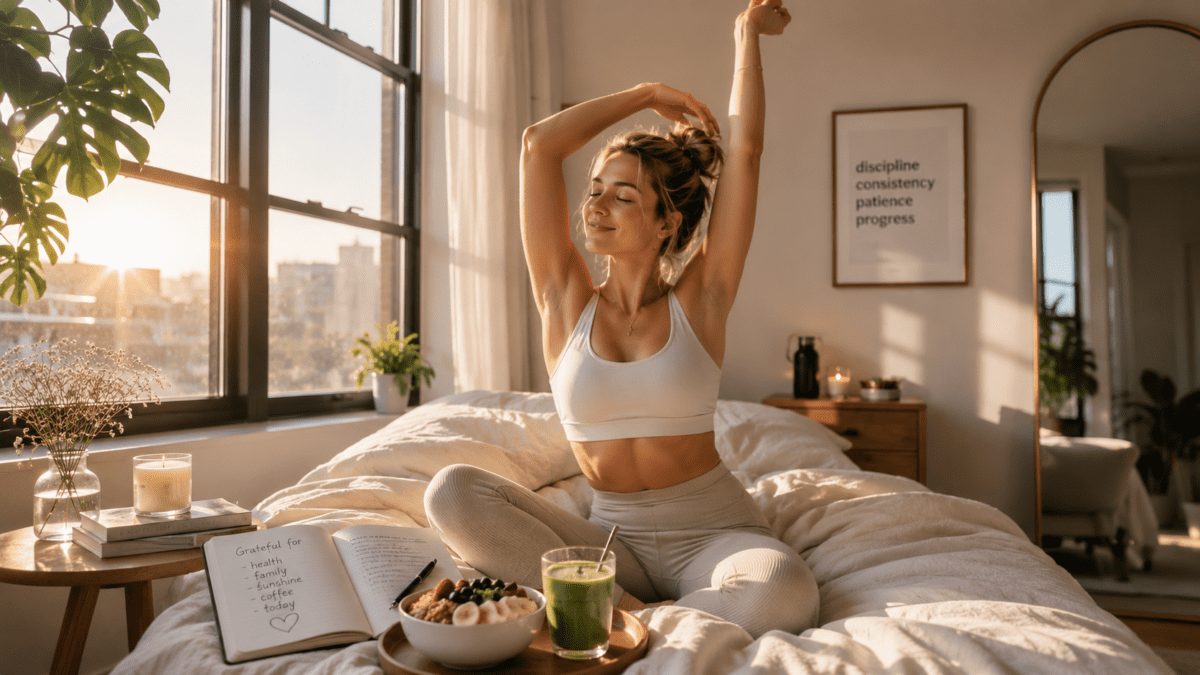
“That Girl Routine” is specific. It’s not just any routine. It’s a carefully constructed daily ritual that’s become a TikTok aesthetic, an Instagram narrative, a blueprint for how to “actually have your life together.”
It looks like this: a 5 or 6 AM wake-up with no snooze button, a cold shower or meditation, thirty to sixty minutes of workout or yoga, a documented ten-step skincare routine, a green juice or smoothie bowl breakfast, focused work hours, an afternoon walk or journaling session, a screen-free evening wind-down, and a 10 PM bedtime.
There’s a specific aesthetic to it: sunlit windows, minimalist spaces, consistency, discipline, calm. There’s a promise embedded in every video: if you do this routine, your life will look like this. Controlled. Purposeful. Peaceful.
The routine exists, and many women genuinely do these things. But what makes “That Girl Routine” different from just… having a routine… is that it’s become a standard. A template. A trophy that proves you have yourself figured out.
And millions of people are trying to fit themselves into it.
The Routine That Promises Everything
The brilliance of “That Girl Routine” is that it doesn’t just promise better organization. It promises a total identity reset. If you follow the routine, the logic goes, you become disciplined, healthy, productive, calm, in control—the kind of person who has her life together.
Each component is supposed to do something specific. The early wake-up builds discipline. The workout builds confidence. The skincare builds self-respect. The journaling builds clarity. The reading builds intelligence. Together, they’re supposed to build a person.
This is why it spreads so virally. It’s not just a schedule. It’s a promise of transformation. And the person posting it—the girl in the video—is the proof that it works. Look at her. Look at how she moves through the world. That could be you.
Except it can’t. Not exactly. Not unless you’re her.
Why We Film Our Routines for Strangers
Here’s what’s changed: routines used to be private. You did them because your body needed sleep, because your mind needed exercise, because your skin needed care. The routine served you.
Now routines are public. They’re content. They’re currency. The routine that gets filmed, filtered, and posted is rewarded with attention. The routine that stays private—the one you actually do, the messy one, the one that changes day to day—is invisible.
So people start performing their routines instead of living them. They do the workout because the workout photographs well in the morning light. They make the smoothie bowl because it’s aesthetically pleasing, not necessarily because they’re hungry. They wake up early because 5 AM routines often seem to perform better on social platforms than later routines.
The routine begins to serve the camera instead of serving you.
And here’s the psychological part: when you watch someone else’s routine, you’re not just watching efficiency. You’re watching someone choose themselves every single morning. You’re watching someone say “my health matters” and then do something about it. You’re watching discipline in action. And when your own life feels chaotic—when you’re not choosing yourself, when you’re not disciplined, when you’re just… reacting to whatever happens—that video hits differently. It feels like a solution.
So you copy it. You think: if I do what she does, I’ll become who she is.
The First Two Weeks, and Then Your Body Says No
This is the honeymoon phase. You set your alarm. You actually wake up. Maybe you’re tired, but you do it anyway because you’ve committed. You feel virtuous. You feel like you’re finally taking yourself seriously. You post about it (maybe privately, maybe publicly). You tell someone: “I’m trying this new routine.”
The first workout feels powerful. The first skincare routine feels like an act of self-love. The early morning feels like you’ve already won the day before most people are awake.
Everything feels new enough to seem sustainable. Everything feels possible. You think: This is it. This is the person I’ve been trying to become.
But here’s the thing about other people’s routines: they were built for someone else’s body, someone else’s schedule, someone else’s nervous system.
Week three arrives. Your schedule shifts. Your body asks for more sleep. Maybe you’re sick, maybe work gets busy, or maybe you simply realize that waking at 5 AM leaves you drained instead of energized.
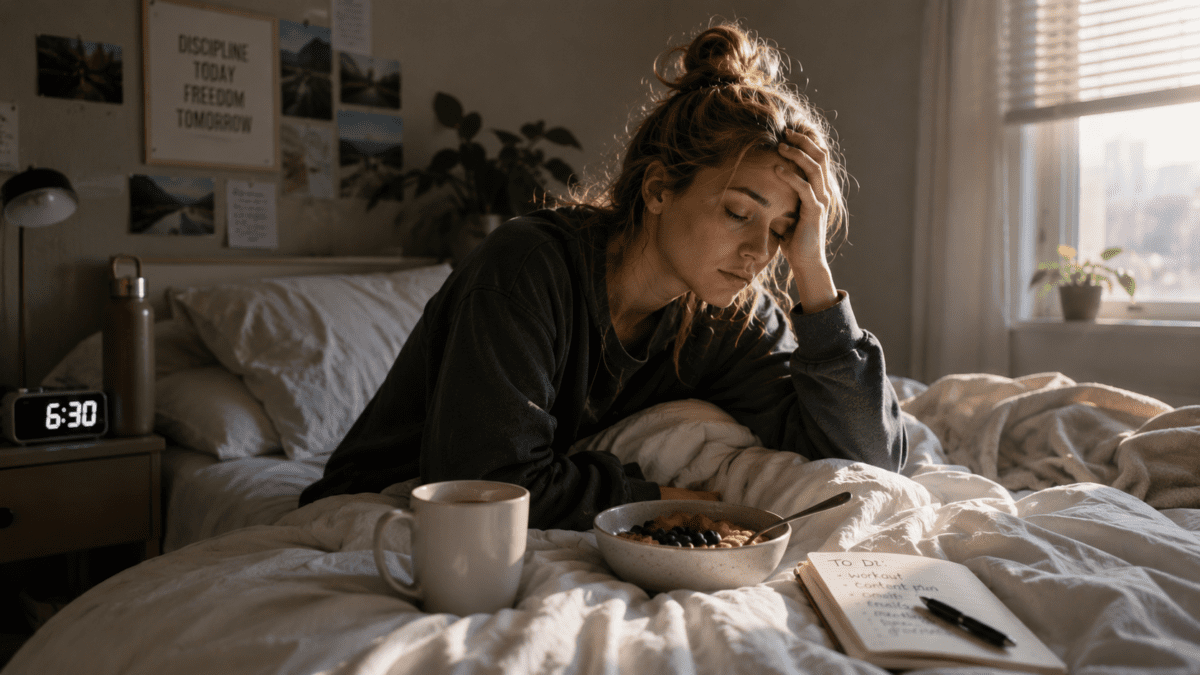
The signs become difficult to ignore. You wake to the alarm instead of naturally. The workout feels heavier. Your skin suffers from lack of sleep. Even breakfast loses its appeal. The routine no longer feels supportive—it feels demanding.
One morning you sit on the edge of the bed, alarm silenced, running shoes untouched by the door. You scroll to her video again. She looks rested. You look at the clock: 5:47 AM. You get back under the covers.
You miss a day, then blame yourself. So you push harder, believing the problem is your discipline.
But the real problem is simpler: you’re trying to fit your actual body, your actual schedule, and your actual needs into a template that was never designed for you.
Maybe you’re not a 5 AM person. Maybe your body comes alive at 9 AM or 3 PM or 11 PM. Maybe cold showers make you feel punished, not awake. Maybe you need quiet in the morning, not a workout. Maybe you’re someone who needs flexibility, not structure. Maybe you need rest more than you need discipline.
None of these things mean the routine was wrong. They mean it wasn’t built for your rhythm. And you’re trying to become someone else.
The Hidden Cost of Living Someone Else’s Rhythm

Here’s what doesn’t get posted: the anxiety. The person following the template perfectly is often exhausted. They’re waking up when their body needs sleep. They’re exercising when they need rest. They’re forcing themselves into a shape that doesn’t fit.
You’re doing everything right, and you’re miserable. The 5 AM alarm goes off and your stomach clenches. You dread the cold shower. You force yourself through the workout while your body sends distress signals. You sit down to your green juice and can’t taste it. You’re checking boxes, not living. You’re performing the role of “That Girl” — not being her.
The system was supposed to make you feel in control. Instead, it makes you feel imprisoned. The routine was supposed to build confidence. Instead, it builds resentment—resentment that you can’t just be normal, that you have to perform constantly, that you have to prove something every single day.
And the worst part: even when you’re doing everything right, you still don’t feel like “That Girl.” Because that version of perfection doesn’t exist. She’s a composition, a carefully curated image, a highlight reel edited to remove all the moments she failed.
What Actually Works Looks Nothing Like the Template
The routine that actually sustains you won’t look like hers. It can’t. It has to match your actual life, your actual body, your actual constraints.
Maybe you wake up at 7:30 AM. Maybe your movement is a walk, not a workout. Maybe your self-care is 5 minutes, not 50. Maybe your productivity looks like deep focus for 3 hours, not scattered effort all day. Maybe you need sleep more than you need early mornings. Maybe you need flexibility more than you need structure.
The point isn’t that the routine exists. The point is that it belongs to you. It’s built on your actual rhythm, not someone else’s performance.
Most people never get here. They spend years trying to fit themselves into the aesthetic and never stop to ask: what does my actual body, my actual mind, my actual life require?
That’s where the real routine lives. Not in the Instagram video. In your actual existence.
Content in this post was created with AI assistance.