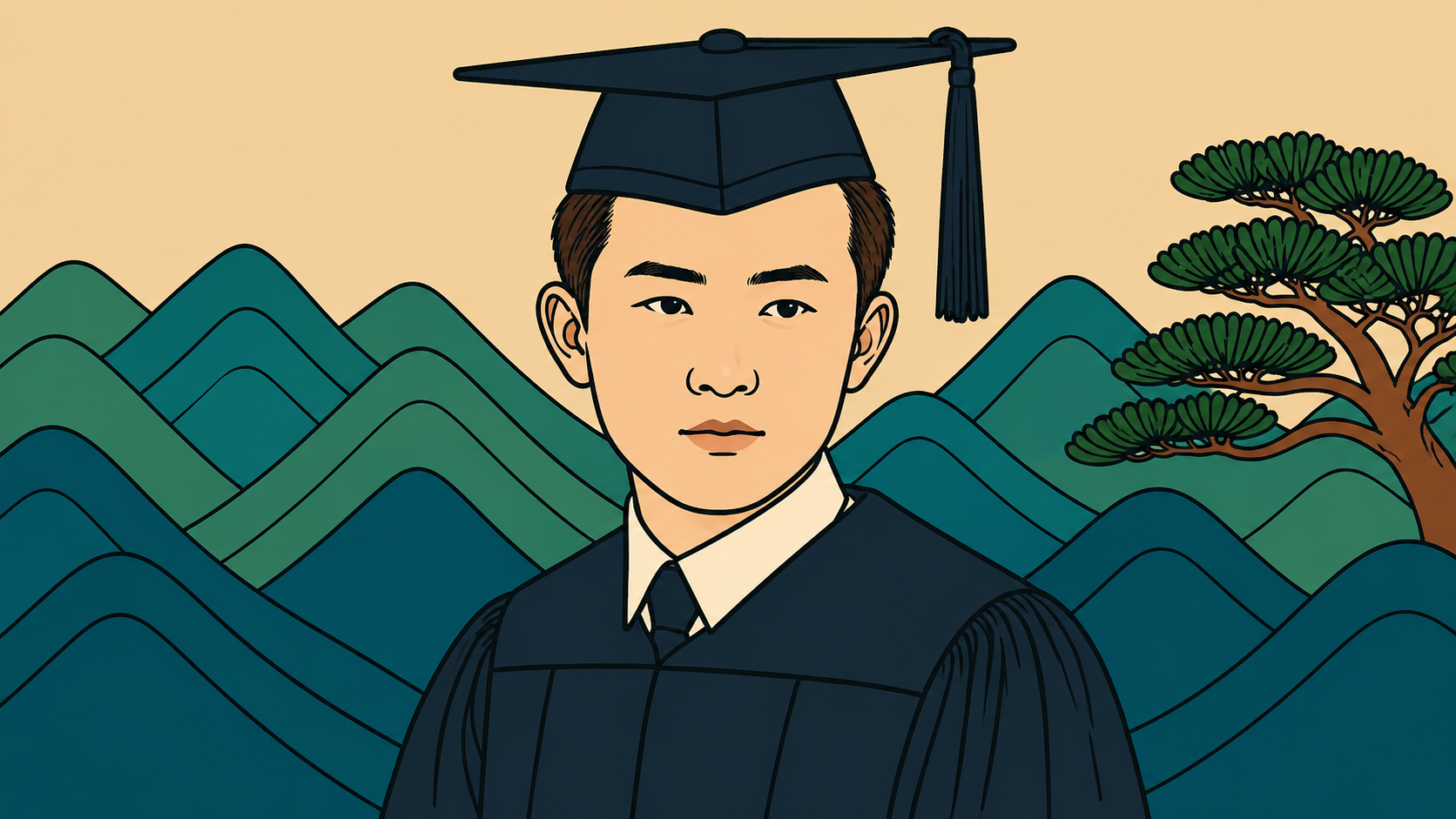
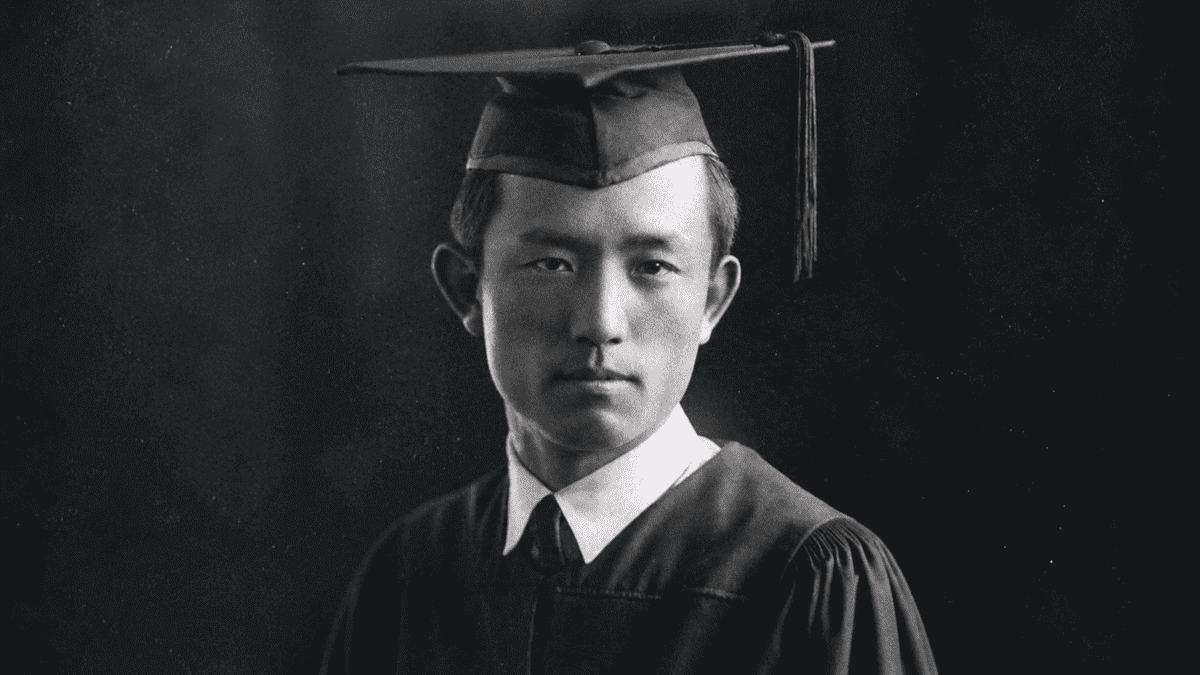
(Edited from a Wikimedia Commons public domain image)
His notebooks contained thirty-one poems. Three years after his death, they would reshape how an entire nation understood itself.
Yun Dong-ju’s poetry arrived in the world after he had already disappeared from it. Born in Myeongdong village near Yongjeong, in the Jiandao region of Manchuria, he grew up in a Korean diaspora shaped by displacement and cultural survival.
The notebooks he filled in secret were not published until 1948, three years after his death in a Japanese prison. Yet when these verses reached readers, they revealed something that official narratives could not fully erase. This is the story of how a young man’s quiet words became the loudest testimony his nation ever carried into the world.
The Poems That Survived
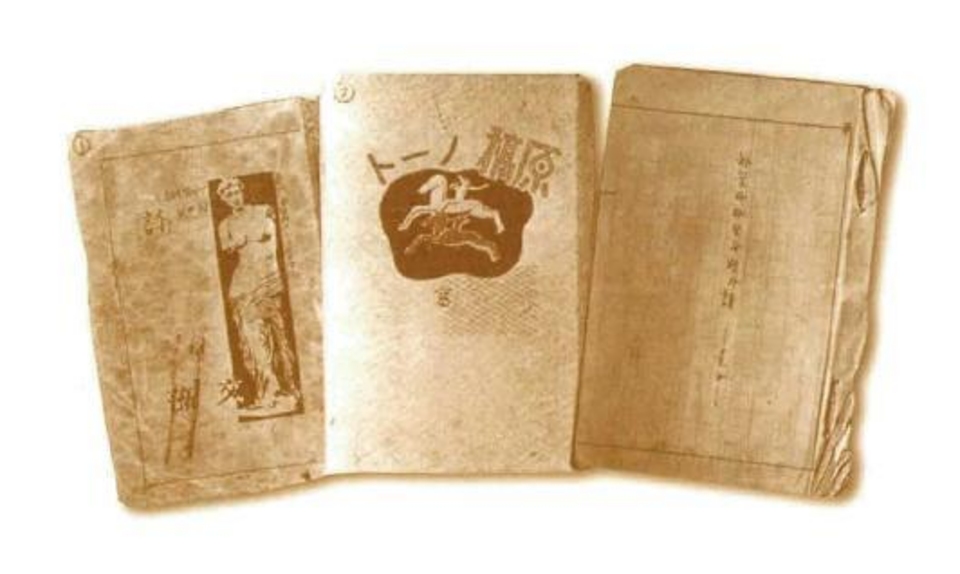
(Edited from a Wikimedia Commons public domain image)
In 1948, readers encountering this work for the first time experienced something they could not quite name. The voice they heard was not angry, not defiant, not announcing itself as resistance. Instead, it was precise, spare, almost fragile—yet it cut deeper than any shout.
Two poems in particular would echo across generations. The first, Foreword (서시: seo-si), opened with a single assertion:
“Until the day I die, let me look up at the sky without a trace of shame; even the wind stirring the leaves made me suffer.”
Read literally, the poem might seem to accept erasure. But Yun Dong-ju’s poetry operated at a different register. The speaker answers to the sky, not to the empire. Shame—his own, privately measured—is the only judge he recognizes. In a state that claimed authority over every standard, quietly relocating that authority inward was itself an act no censor could reach. In occupied Korea, where the empire demanded complete surrender of identity, this quiet assertion of internal dignity was revolutionary. The work did not shout “I will resist.” It simply documented the texture of resistance through the act of remaining oneself.
The second poem, Counting the Stars at Night (별 헤는 밤: byeol-he-neun-bam), operated through a different mechanism. It enumerated remembered names—of loved ones, of places, of lost things:
“One star, and memory; one star, and love; one star, and loneliness. I cannot finish counting the stars now carved one by one into my chest, for morning comes too soon.”
The counting does not restore. It simply asserts that loss deserves acknowledgment. In this poetry, memory itself becomes an act. The naming of what was lost proves that it existed. In a nation being systematically erased, the act of counting—of speaking names aloud—was testimony.
What distinguished this work was not political obviousness but restraint. Other poets of the era shouted. Yun whispered. And in that whisper lived something the empire could not control: the precise documentation of what it felt like to be erased. His words did not demand agreement or action from readers. They simply said: this happened, I witnessed it, I did not disappear entirely—and in that assertion lay everything.
Decades later, when readers would encounter this work in translation, they would recognize themselves in these sparse, precise observations. Yun Dong-ju’s poetry never explained itself. It did not annotate its own meaning or translate its own sorrow into digestible statements. This refusal to explain was itself a form of integrity. The reader had to meet the work halfway, bringing their own losses, their own experiences of erasure, to the encounter.
What readers saw in it was often what they needed to see—yet what they found there was always true to what he had actually written. The distance between these two things was where understanding began. Not because they had experienced occupation, but because they recognized in his restraint something universal about what it means to be human when systems demand you disappear.
Why He Was Arrested
Yun Dong-ju was not arrested for a single incriminating act. He was arrested for what his work represented: a consciousness the occupation could not colonize.
In 1943, while studying in Japan, he came under intensified surveillance. Japanese authorities targeted Korean students who refused to accept the narrative that Korea no longer existed. They wrote in Korean. They read Korean literature. They gathered quietly to discuss Korean culture. To the occupation, these acts seemed threatening not because they were violent, but because they proved something the empire could not tolerate: that occupation of territory was not the same as occupation of mind.
His notebooks were evidence of this refusal. Yun Dong-ju’s work—the quiet documentation of erasure in his own language—embodied precisely what authorities feared. For many colonized students and writers, continuing to write in Korean carried cultural and political meaning. By July 1943, at twenty-six years old, that accumulation of quiet refusal finally prompted the authorities to act. The charge was vague—violation of the Peace Preservation Law—but the substance was clear. Japanese authorities viewed Korean nationalist and cultural activities among students with growing suspicion: proof that a people’s consciousness could remain free even when their territory was occupied.
Death, Silence, and the Return of Words
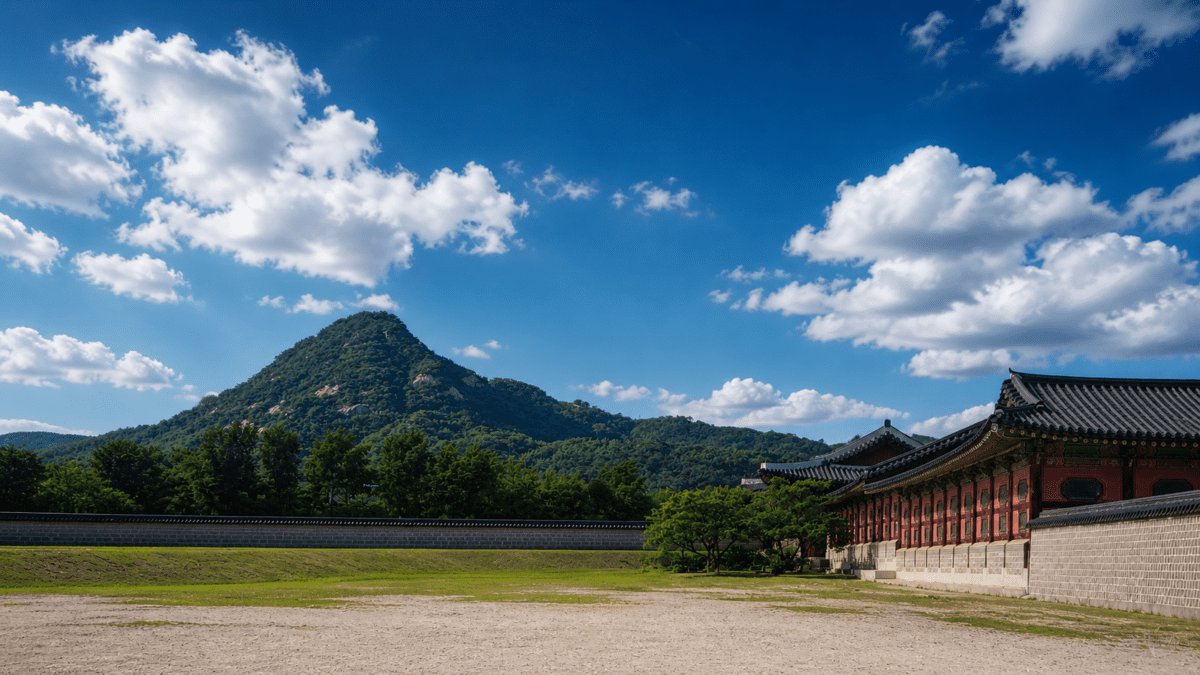
Fukuoka Prison was not designed to rehabilitate. The cell was small, cold, deliberately sparse. The food was inadequate. Medical care was minimal. Fellow prisoners would later recall that Yun bore these conditions with unusual composure—not resignation, but a kind of enduring calm. His body weakened gradually, then sharply. Malnutrition set in. In February 1945, six months before Korea’s liberation, he died in the prison.
The official cause was recorded vaguely. Some accounts raised the possibility of medical experimentation, though this remains debated. What is certain is that accumulated deprivation claimed him—not through dramatic collapse, but through the slow erasure the occupation had always promised.
A young man who had spent years writing by lamplight in secret now existed in a cell where even that minimal freedom was denied. He would not see his nation’s name restored to maps. He would not witness the moment when Korean could be spoken freely in schools and streets.
Yet what appeared as complete erasure was only a transformation waiting to happen.
Three years after his death, when Korea had regained its independence, his handwritten notebooks were recovered and published. Yun Dong-ju’s poetry entered the world not as a new voice, but as a voice that had always existed, waiting to be heard. A nation that had just been liberated from erasure suddenly encountered a poet who had documented from the inside what erasure felt like.
His work moved through the decades like a current. It is believed that in the 1970s and 1980s, when South Korea faced its own struggles for freedom, students facing censorship and surveillance found in these verses a language for what they could not yet speak aloud. His poems reportedly circulated among activist circles, preserved through hand copies and quiet recitation. The same mechanism that had allowed him to survive the occupation—writing in secret, circulating among trusted readers—became the method through which his legacy persisted through dictatorship.
From the 1980s onward, his work gradually entered international academic circulation. Universities began incorporating his poems into curricula, and scholarly attention grew steadily. International academic journals published essays analyzing his work. University presses released new translations into English, German, French, Spanish. Museums mounted exhibitions of his handwritten manuscripts. Prize committees awarded recognition to translations of his work.
Through these mechanisms—the classroom, the journal, the museum, the translation—his work gradually entered the architecture of global literary culture. Readers in cities where the occupation had never existed—Tokyo, Berlin, New York—encountered a young man’s precise observations about loss, memory, and the refusal to surrender dignity. They recognized themselves in his work, not because their circumstances matched his, but because his observations reached toward something timeless.
Today, this work is recognized as one of the most significant and widely read works of Korean literature in translation. His life is studied in universities on every continent. The boy who grew up under a system that increasingly discouraged the public use of Korean became the voice through which the world learned what Korean consciousness had endured and survived.
The Silence That Reached the World
Yun Dong-ju’s poetry left behind a quieter realization: A people’s authentic voice—refined, uncompromising, true to its own essence—does not need to explain itself to move the world.
He did not write to convince. He did not write to persuade. He wrote to testify. And in that testimony lived a kind of spiritual authority that no external system could diminish or control.
Speaking Through Silence: Yun whispered rather than shouted. He counted stars rather than declared their meaning. This aesthetic—saying more through less, revealing depth through precision—became his signature. The refusal to explain asked the reader to rise, not the poem to stoop.
What Needs No Justification: Yun never asked permission to be Korean. He never justified his existence or apologized for his consciousness. He simply was. This refusal to explain became a form of power—one that no occupation could ultimately destroy.
The Act of Naming: Yun’s act of counting and naming—preserving what the empire tried to erase—was itself an act of resistance. Memory became testimony. To say a name aloud was to refuse its deletion. In a nation being systematically erased, this act of witness was revolutionary.
What Power Cannot Reach: Most importantly, Yun proved that no occupation—no system, no power structure—could ultimately erase a people’s inner life. The consciousness remained. The language remained. The heart’s beating remained.
His work, suppressed under occupation, returned decades later as proof of a simple truth: authentic expression, refined through restraint and rooted in genuine witness, carries a power that no external force can diminish. The voice that whispered in prison cells echoed forward, generation to generation, a testimony that could not be silenced.
The Irony and Continuity
The empire had tried to ensure that his voice would never be heard. Instead, his death sealed his work in memory with the force of testimony. What appears as erasure is sometimes only delayed. Yun Dong-ju’s poetry moved through generations, each encountering in it something their own moment required: proof that even when systems demand you disappear, the act of bearing witness—of writing, of counting, of remembering—can outlast the systems themselves.
Over time, the pattern became difficult to ignore: authenticity without apology, depth revealed through restraint, consciousness that refuses erasure.
A poet who died at twenty-six in an obscure prison. His notebooks, recovered three years later. Seven decades of quiet circulation through secret readers, classrooms, international stages. The footprint moved forward through generations, often unrecognized but never absent.
He invented nothing new. Yet later generations kept recognizing themselves in the emotional structure he left behind.
Content in this post was created with AI assistance.