
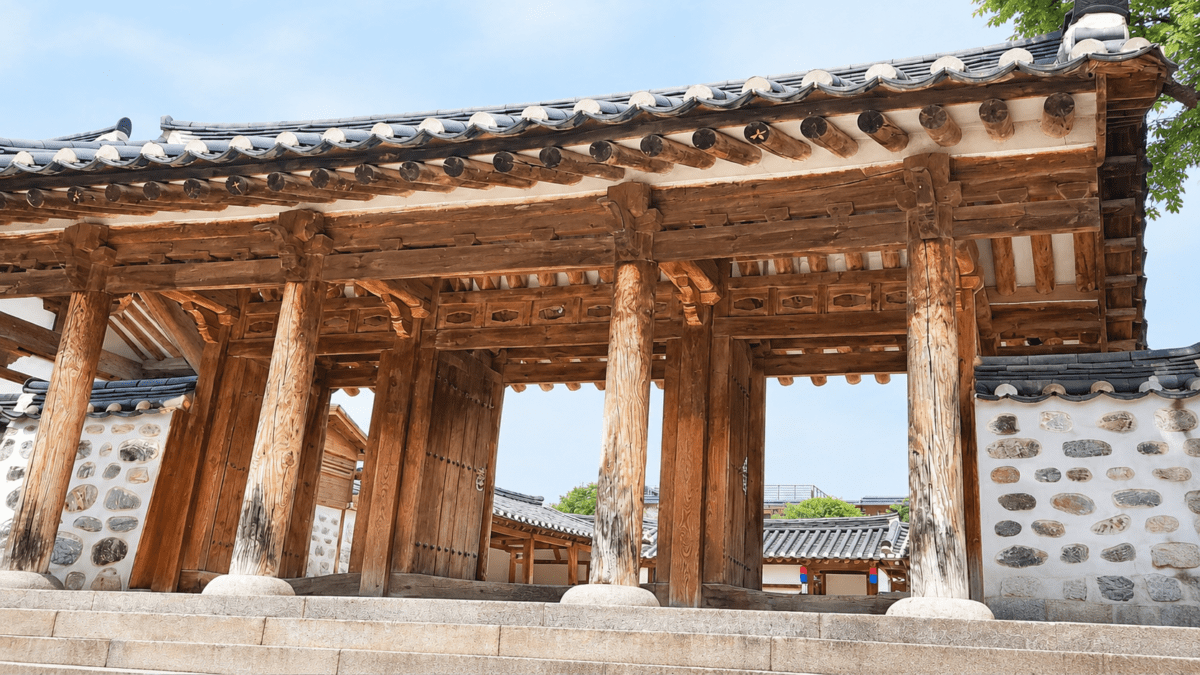
It’s mid-June and the day has stopped easing into itself. By 10 AM the heat is already sitting on your skin. By noon the light is flat, overhead, and impossible to stand under for long without adjustment.
This shift has a station in K-Saju. O (오: o, summer peak fire), the seventh of the twelve earthly branches, is where everything that was partial in Sa becomes fully visible and everything that was hidden runs out of places to remain hidden.
Sa was the threshold. O is what lies beyond it. The last ten percent that Sa held back now has nowhere to stay back. A chart carrying O at its center runs on that same peak logic: being seen under full exposure, checked by the heat rather than protected from it, finding out whether what was prepared can sustain itself when nothing is filtering the light.
What the Summer Solstice Meaning in Astrology Actually Records
O is the second fire branch in the twelve-station system — the one that completes what Sa began. The hour is 11 AM to 1 PM. The month spans early June through early July, bounded by the solar terms Mangjong (망종: mang-jong, grain in ear) and Soseo (소서: so-seo, minor heat). The element is Fire (화: hwa) at its structural peak.
O is classified as yang fire in the positional system — the branch of noon, the sun at its highest point. But the dominant hidden stem within O is Jeong (정: jeong, yin fire, the candle), not Byeong.
This internal inversion matters: the most visibly yang position in the entire cycle carries yin fire at its center. What looks like maximum outward radiance is, inside, a contained and directional flame. This is one of the reasons peak exposure does not automatically produce sustained output, and why two charts with O prominent can look identical at the surface but function very differently underneath.
O is not personality. It is a structural month in which whatever has been built finally gets tested by full light. The person with O prominent will spend this window being seen in ways that cannot be calibrated anymore — not from exhibitionism but from the positional fact that O does not allow partial visibility the way Sa did.
What O records is a specific kind of arrival. Whatever outlines sharpened in Sa are now standing in the open. The chart that holds O at its center is reading the moment where preparation meets consequence, and the consequence is not decided by the chart alone.
The Internal Structure Behind the Peak
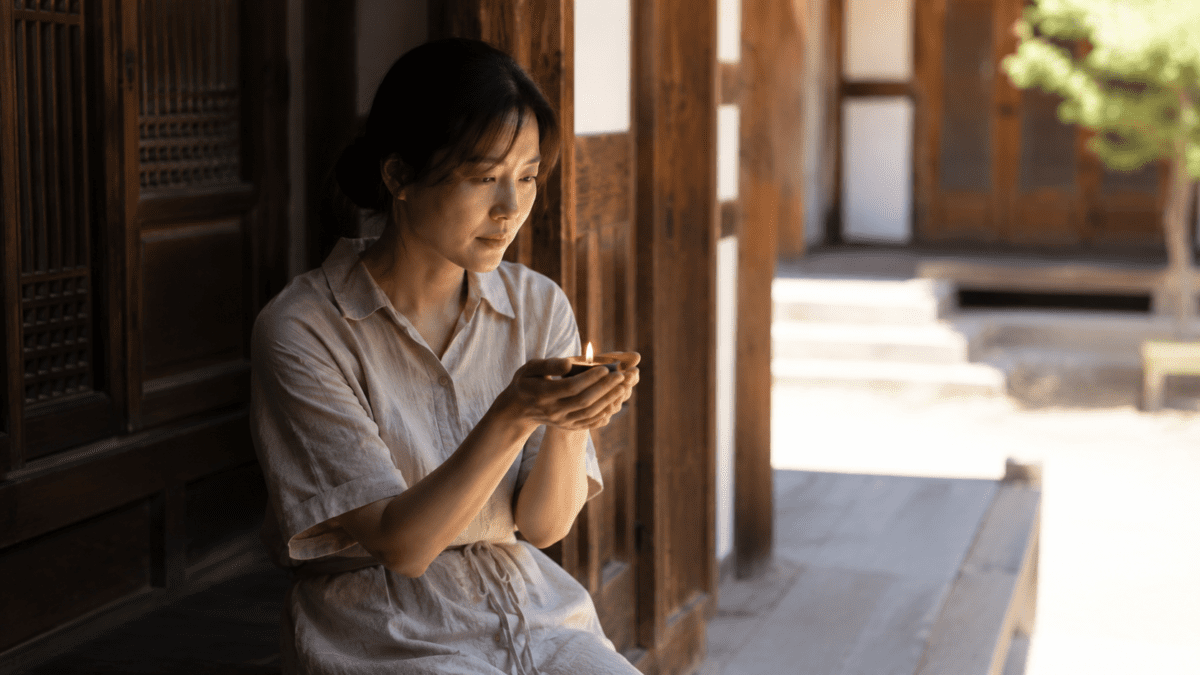
The real mechanism lives inside O’s Jijanggan (지장간: ji-jang-gan, the hidden stems concealed within a branch). O carries three hidden stems: Byeong (병: byeong, yang fire, the sun), Gi (기: gi, yin earth, the field), and Jeong (정: jeong, yin fire, the candle). Of these three, Jeong is the dominant stem — the one that actually governs O’s sustained expression. Byeong provides the initial outward radiance. Gi provides the earth bed that absorbs excess heat. Jeong is the internal flame that decides whether the peak holds or collapses back.
The sequence matters. Byeong enters first as the residue of Sa’s threshold — the sun that has now fully crossed into daylight. Gi settles in the middle, the absorbing field that keeps the peak from burning itself out. Jeong dominates last and defines the branch — the directional candle that persists even when the external spectacle fades. By the time O is fully active, the chart is running on displayed fire, absorbing earth, and internal flame, with Jeong quietly in charge.
Three interactions govern how O behaves with the rest of a chart.
OMiHap (오미합: o-mi-hap, combination linking to fire). When O and Mi (미: mi, late summer earth) appear together, the two branches form a fire-aligned combination. The transformation does not always complete fully — this combination behaves more like “sun and moon” than “fire generating fire,” with the actual change conditional on surrounding stems and branches. A chart with this pairing is often read as carrying a stable heat that extends into late summer rather than collapsing after the peak.
InOSul SamHap (인오술 삼합: in-o-sul sam-hap, three-combination producing fire). When In (인: in, first yang wood), O, and Sul (술: sul, late autumn earth) appear together, the three branches combine into a strong fire structure. O is the anchor of this three-harmony — the peak that in-released wood ignites and autumn earth eventually stores. A chart with this configuration carries deep fire resources that keep generating output long after the external seasonal fire has moved on.
JaOChung (자오충: ja-o-chung, water-fire axial clash). Ja (자: ja, midnight water) and O sit directly across the cycle — the coldest, most retracted water against the hottest, most exposed fire. When they meet, the clash runs along the day-night axis itself. This is one of the most structurally forceful clashes in the cycle, comparable in weight to the other axial oppositions (InSinChung, MyoYuChung, JinSulChung). In practice, this looks like a year where something hidden in the chart’s night-structure surfaces and challenges whatever was built for the day.
These three interactions determine whether the peak sustains or consumes itself. The reading does not rest in visibility itself — it rests in whether Jeong’s internal flame can sustain what Byeong’s external display attracted. How a chart protects or exhausts Jeong determines what the reading says. The contained flame at the center of this branch is the stem-level mechanism that makes this reading possible.
Three Ways the Peak Collapses

O has three failure modes, and two of them look identical from the outside.
Burned-through peak. The chart has O prominent but no earth branch to absorb the heat — no Mi, no Sul, no Chuk to store what gets produced. Byeong radiates without containment. Jeong exhausts itself trying to compensate. Externally this looks like someone who reaches full visibility and then has nothing left to hold the position — not from weakness but from a structural absence of the element that would have kept some of the heat for later. The peak is real. What’s missing is the ground that would have stored its output.
Peak without internal flame. The opposite failure. The external display is present but Jeong has been overridden — often by a heavy water configuration that douses the internal candle while leaving Byeong’s surface radiance intact. In practice, this looks like a person whose public presence is at peak while their internal sustaining capacity has quietly gone out. The surface keeps running on momentum. Underneath, the flame that was supposed to carry the work into late summer is no longer there.
Axial rupture during peak. The subtlest failure. JaOChung activates, either natally or through Sewoon (세운: se-woon, the annual cycle), and something from the chart’s opposite pole surfaces at exactly the moment of highest exposure. The night-structure challenges the day-structure in public. In chart terms, this is the year where what was hidden in winter’s water returns in summer’s light — a contradiction the person may have forgotten was there, now visible because O gives it no shadow to stand in.
Peak exposure is not the same as peak sustainability. O reads each of these failures as structural rather than character flaw. Burned-through peak asks for an absorbing partner — something earth-based that can store the output before it dissipates. Peak without internal flame asks for protection of Jeong — reducing the external demands until the internal candle can be relit. Axial rupture asks for acknowledgment of the night-structure — facing what the opposite pole is surfacing rather than trying to outshine it.
O in Each of the Four Chart Positions
Being seen lands differently depending on where O sits in the chart’s four positions — Yeonji (연지: yeon-ji, birth year position), Wolji (월지: wol-ji, birth month position), Ilji (일지: il-ji, birth day position), Siji (시지: si-ji, birth hour position). Each position changes what is actually being exposed at full light.
Yeonji (연지: yeon-ji): O at the year level often corresponds to a generational pattern of high public visibility — family lines or cohorts that developed traditions of prominence, leadership, or public exposure as structural inheritance. People with O at the year level often carry inherited instincts for how to be seen rather than needing to learn it as a skill.
Wolji (월지: wol-ji): This is the structurally heaviest position for O. Month branch sets the chart’s elemental center of gravity, and O as month places the whole chart in peak fire logic. The person tends to operate under full exposure by default — always being seen, always checked by the light. This is also the position where JaOChung carries the most weight when a Ja year arrives. The clash lands on the chart’s center of gravity, and whatever winter material the chart has been avoiding comes into summer’s light.
Ilji (일지: il-ji): O at the day level describes the person’s immediate environment and closest relationship. The partner, the home, the daily body — all run peak logic. Comfortable being seen, accustomed to being checked, sometimes exhausted by the constancy of exposure within close relationships. Relationships with an O day branch often thrive when there is explicit acknowledgment that one person in the pairing cannot easily have a private internal life that stays hidden from the partnership.
Siji (시지: si-ji): O at the hour level describes late-life output and the way one’s final chapter handles visibility. Careers that end at or near peak — work delivered fully, archives opened rather than curated, reputations shaped by what was deliberately put on record — often correspond to O at this position.
Daewoon (대운: dae-woon, the ten-year major cycle) can also land on O. When it does, the ten years tend to run on peak logic regardless of what the natal chart prefers. This is the decade where the summer solstice meaning may override personality, preference, and plan. A person who has spent the previous decade in Sa’s threshold work will find themselves in a ten-year window where the protected ten percent is no longer protected. Not as loss, but as the structural requirement to sustain what has now become visible.
Where the Peak Reading Stops
O gives a relatively clear reading of three things: when the peak window is structurally active, which of the three hidden stems is currently most weighted, and whether JaOChung is approaching within the next two years. What Sa held in partial visibility is now fully in the open, and O is the station at which the chart’s earlier preparation meets the heat that tests it.
What the data does not resolve is whether the preparation was adequate for the peak it is being asked to sustain. This is where misreading happens in both directions. A chart with strong O can be misread as guaranteed success when the internal Jeong has been quietly exhausted by the previous decade. A chart with weak O can be underestimated when the absorbing earth structures are quietly holding the peak together from underneath.
O requires more caution in reading than its visible intensity suggests. The surface radiance is easy to read. The internal flame is harder. Certainty about an O chart without examining the supporting stems and branches is premature.
The strategic response to O is less about amplification and more about sustaining. The peak has already arrived. The question is not how to reach it but how to hold it. Identify which supporting structures — earth to absorb, stems that feed Jeong rather than exhaust it, adjacent branches that stabilize rather than compete — are currently active, and protect them.
If JaOChung is on the horizon, begin acknowledging now what parts of the chart’s winter material have not yet been faced. The clash will surface them during peak regardless. Whether they surface as rupture or as integration depends partly on whether they were acknowledged before the light arrived.
The peak is not the end of the work. It is the moment the work becomes answerable to something other than the chart itself. What happens next is where the reading opens rather than closes.
This post was planned and edited by a human, with AI assistance.