Tarot vs K-Saju — Two Systems, Two Questions (Part 5)

Tarot vs K-Saju — two systems, two questions. Tarot reads what’s alive in this moment. K-Saju reads where that moment sits in the cycle.
Tarot vs K-Saju — two systems, two questions. Tarot reads what’s alive in this moment. K-Saju reads where that moment sits in the cycle.

The card lands and you go quiet — you already know. An intuition tarot reading surfaces what you’re sensing; K-Saju reads the cycle generating it.

Your tarot timing reading said now. The energy was there. Here’s why energetic timing and structural timing are two different things.

The same tarot spread timing keeps showing up. K-Saju reads the cycle generating the pattern. Two systems, two layers of the same moment.
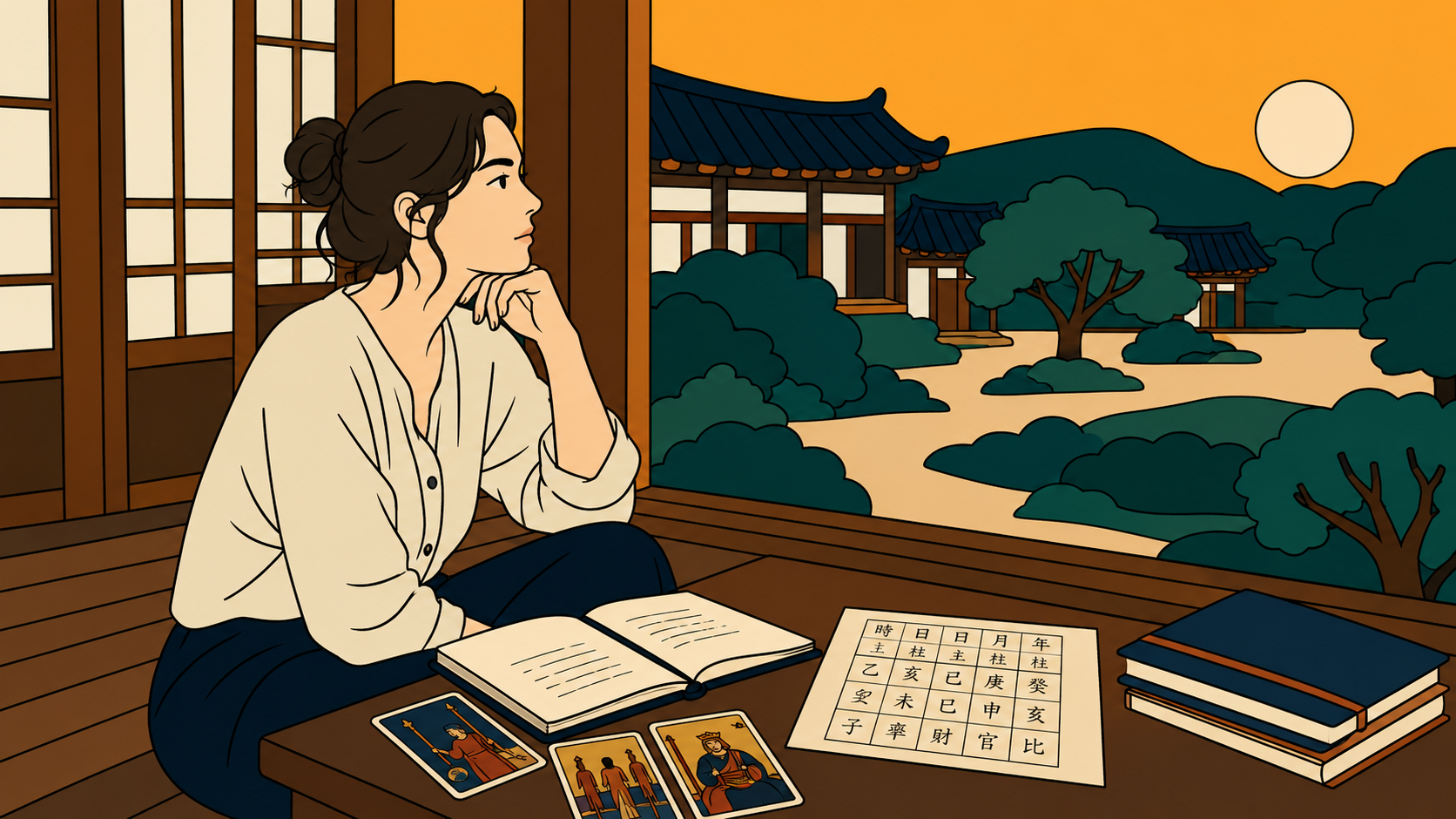
A tarot reading lands exactly where you are. K-Saju looks at the same moment and asks something different. Two questions.

The Korean gat hat vanished by the 1950s. It came back through a zombie drama — then K-pop stages and palace courtyards. Here’s what survived.

The Korean gat hat history took a dark turn in 1895. One order erased a visual language five centuries in the making.

In 1816, a sketch of a Korean gat made Napoleon laugh with delight. Here’s what the hat actually meant — and why it took centuries to build that meaning.

Water element meaning in K-Saju: why the quiet years that produce nothing visible are where the next phase is being built underground.

Metal element meaning in K-Saju: why high standards can quietly become a life stuck at almost, and what makes a clean ending possible.